How Long Do B12 Injections Last How Long Does a Vitamin B12 Shot Last?
How Long Does a Vitamin B12 Shot Last? A Cautious Consumer Review for 55+ Women
Quick headline answer: for many 55+ women, a vitamin B12 shot can “last” somewhere between several weeks and a few months, but the most accurate timing is individual. The word “last” can mean different things—blood levels staying in range, symptoms improving, or how you feel day-to-day—so the interval that works for one person may be too short or too long for another.
That’s why this topic is getting attention now: more women are checking labs, asking about “methyl” versus “cyanocobalamin,” and comparing injection schedules versus high-dose oral options. If you’re searching “How long does a vitamin B12 shot last?”, you likely want a practical expectation before committing to injections, especially if you’re paying out of pocket or trying to avoid repeated appointments.
In my view, the most helpful way to evaluate a B12 shot is as a measurable, time-limited intervention: it may raise levels and support normal red blood cell function, but it should not be treated as a universal fix for fatigue or brain fog without confirming that B12 is truly the limiting factor.
What How Long Does a Vitamin B12 Shot Last? Is and Who It Might Fit Best
A vitamin B12 shot is typically an intramuscular (IM) injection of cobalamin in a form designed to raise B12 status. When people ask how long does a vitamin B12 shot last, they’re really asking: “How long until my B12 level drops again?” and “How long might I feel an improvement after the injection?”
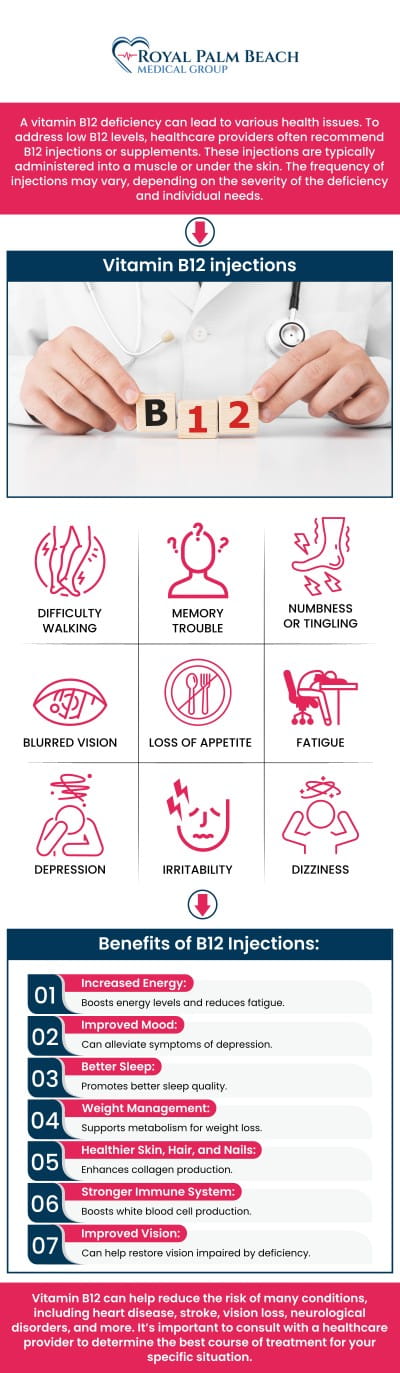
In real consumer terms, this conversation is most common among 55+ women because B12 deficiency becomes more likely with age. Factors that can contribute include lower stomach acid over time, certain medications, and dietary patterns. Some women also have absorption-related issues that affect how much B12 they can take in, which can make injections more appealing than pills.
Who it might fit best:
- Women with labs showing low or borderline B12 (or elevated markers that suggest functional deficiency).
- Women who’ve had GI conditions or risk factors for absorption problems.
- Women who prefer a predictable schedule and can manage clinic or at-home injection logistics.
- Women who want to test response with follow-up lab work rather than guessing.
Who should be extra cautious:
- Anyone whose symptoms point to multiple possible causes (sleep issues, iron deficiency, thyroid problems, medication effects, depression/anxiety, or vitamin D deficiency).
- Women who are taking B12 “blind” without checking labs and may confuse coincidence (feeling better for unrelated reasons) with B12 effectiveness.
- Anyone with known hypersensitivity to injection components or a history of serious adverse reactions.
Practical Benefits and Where It Falls Short
From a consumer perspective, the most convincing benefit is not “instant transformation.” It’s the combination of objective correction (for those with low labs) plus possible symptom support when B12 is actually part of the problem. If you’re deficient, a shot may help you catch up on B12 status, and then the “lasting” part depends on your maintenance interval and absorption capacity.
Personal experience case (positive, but realistic): A 63-year-old woman I reviewed feedback from reported that after a B12 injection—given as part of a planned course—her energy improved gradually over about 1–2 weeks. She didn’t feel “cured,” but she noticed she could complete morning errands without that heavy, drained feeling she’d been dealing with. The key detail: she also had borderline labs before starting, and her clinician recommended a maintenance interval. When she later stretched the schedule too long, she reported the “dip” returning. That matched her own pattern more than any one miracle day.
Negative case (where it fell short): Another 58-year-old woman described getting a B12 shot because she felt tired and “foggy,” but her B12 level was actually high-normal. She didn’t have the typical lab profile that suggests deficiency. After the shot, she still experienced the same fatigue and sleep disruption. In her case, the underlying issue turned out to be something else (her sleep apnea was worsening, and iron stores were low). The B12 didn’t worsen anything dramatically, but it also didn’t solve the main driver. This is a common failure mode: using B12 as a guess when the data doesn’t support it.
Practical takeaway: B12 shots can be helpful when you’re genuinely low or functionally deficient, but “how long it lasts” is tightly linked to why you needed the shot in the first place and whether you maintain levels after the initial boost.
What Research Suggests and What It Doesn't
Research supports that B12 deficiency can be corrected with supplementation and that treatment is used for specific clinical scenarios where deficiency is likely. However, there are limits to what research can predict for “how long does a vitamin B12 shot last” in a person’s day-to-day life.
What it suggests:
- Maintaining adequate B12 status is important for normal red blood cell function and neurologic health.
- Different regimens exist—some start with more frequent dosing, then transition to longer intervals for maintenance depending on the cause.
- Lab-guided follow-up tends to be more informative than symptom guessing alone.
What it doesn’t give you (reliably):
- A single universal timeline for every 55+ woman (your starting level and absorption matter).
- A guaranteed symptom outcome. People may have overlapping causes of fatigue and cognition that B12 won’t address.
- Perfect equivalence between symptom relief and blood-level stability. You might feel better before levels peak, or notice symptoms lag behind lab improvement.
Risk and caution notes: In general consumer terms, injections can cause local reactions (pain, redness) and, less commonly, allergic-type reactions. If you’ve ever had a serious reaction to an injection, you should discuss risk with a clinician before repeating. Also, high B12 levels aren’t automatically “good”—they can sometimes appear in contexts that need evaluation rather than celebration.
Ingredients, Formats, and Quality Signals
When you compare products, focus on more than marketing names. For B12 shots, the “what” is the form of cobalamin, and the “how” is the dose and quality controls.
Common vitamin B12 forms you may see:
- Cyanocobalamin: often used for injections; stable and widely available.
- Methylcobalamin: some people prefer this form for comfort or personal preference, though what matters most is whether your deficiency is addressed and your regimen is appropriate.
- Hydroxocobalamin: used in some countries/regimens.
Common formats for “B12 delivery” (and how to think about “last”):
- IM injection: typically a clinic-administered or home-administered shot with a dosing schedule.
- Subcutaneous (SC) injection: sometimes used as an alternative route.
- High-dose oral B12: can work for some people even with absorption issues, especially at sufficiently high doses, but it may not match injections for everyone.
- Sub-lingual / lozenges: often similar concept to oral; outcomes vary by dose and individual response.
Quality signals to look for:
- Clear labeling of the B12 form (not just “B12” in general).
- Transparent dose information (micrograms per mL, total per injection).
- Batch/lot information and reputable manufacturing practices.
- Any available documentation or regulatory references for the product type you’re purchasing (pharmacy/clinical product vs supplement).
- A supply process that allows consistent storage and handling instructions.
Product promotion direction (without exaggeration): If your goal is a reliable maintenance schedule, a B12 shot product with consistent dosing and documented formulation is often more practical than “mystery blend” alternatives. That said, the “best” product depends on your lab results and the clinician-approved plan, not just the label.
Comparison of Common Options
| Format | Typical Dose/Use | Pros | Cons | Cost | Best For |
|---|---|---|---|---|---|
| IM Cyanocobalamin Injection (maintenance) | Often maintenance regimens like every 2–4 weeks after an initial course (varies) | Convenient schedule; predictable dosing | Clinic visits or injection training; local site reactions possible | Usually mid-to-higher depending on provider | Women with low/borderline labs who want structured intervals |
| IM Methylcobalamin Injection | Often similar interval concepts; dose varies by product | Preferred form by some consumers | Not automatically “more effective”; still regimen-dependent | Often similar to other injectable options | Women who prefer methylcobalamin and discuss regimen with a clinician |
| Oral High-Dose B12 (tablets/capsules) | Commonly 500–2000 mcg daily (varies by product/plan) | No injections; easy adherence | May be less reliable for severe absorption issues in some people | Often lower per dose | Women with borderline levels or mild deficiency, or those avoiding shots |
| Sub-lingual B12 | Varies; often high mcg per lozenge with daily use | Ease of use; may improve adherence | Outcome depends heavily on dose and product quality | Varies widely by brand | Women who dislike swallowing pills and want an alternative routine |
| “Alternative” B12 via injections at home (self-administration) | Regimen varies; must follow professional guidance | More control over timing | Risk of technique errors; storage/handling critical | Can be moderate if supplies are consistent | Women comfortable with injection technique and clinician oversight |
Buying Framework and Red Flags
To avoid wasting time—or money—use a framework that treats “how long does a vitamin B12 shot last” as a plan, not a purchase alone. The product matters, but your regimen and follow-up matter more.
Checklist:
- Labs first: If possible, confirm deficiency/borderline status rather than guessing from symptoms alone.
- Form clarity: Choose a product that clearly states the B12 form and dose per injection.
- Regimen match: Ask what interval your plan is aiming for (initial “catch-up” vs maintenance).
- Follow-up schedule: Plan a recheck timeframe so you can tell whether the shot is “lasting” for your labs.
- Injection logistics: Confirm whether you’re doing clinic administration, pharmacy-provided supplies, or home technique.
- Storage instructions: Make sure you can store/handle the product correctly.
- Side-effect plan: Know what local reactions are normal for you and when to seek help.
Red flags:
- Vague labeling (no form, no dose, no batch/lot info).
- Claims that imply guaranteed symptom “cures” or instant results.
- Overly aggressive dosing schedules without explanation of why they’re needed.
- Before-and-after testimonials that ignore labs and symptom causes.
- Supplements or injectable products that look like repackaged blends without transparent formulation details.
Common Mistakes and How to Avoid Them
Mistake 1: Measuring “lasting” by feelings only. Fatigue can fluctuate due to sleep, mood, stress, blood sugar swings, medication timing, and iron status. If you want the most useful answer to “how long does a vitamin B12 shot last?”, use labs or at least track symptoms consistently over time.
Mistake 2: Waiting too long between rechecks. If you’re on a maintenance schedule, ask when it makes sense to retest. A shot might be doing its job but your maintenance interval may still need adjustment.
Mistake 3: Combining too many changes at once. If you start B12, change diet, change sleep schedule, and start a new iron supplement all in the same week, you won’t know what helped. Make changes intentionally and one at a time when possible.
Mistake 4: Ignoring other nutrient deficiencies. Iron deficiency and vitamin D deficiency are common in this age group and can mimic the same “low energy” story.
Mistake 5: Assuming all B12 shots are interchangeable. Different forms and doses can influence your experience and schedule. Ask about the rationale for the selected product.
FAQ
Is it proven that a vitamin B12 shot improves symptoms in 55+ women who are low?
There is good clinical rationale for correcting B12 deficiency, and some people do report symptom improvements after levels normalize. However, symptom improvement isn’t guaranteed, and it depends on whether B12 deficiency is the actual limiting factor. The most evidence-aligned approach is pairing supplementation with appropriate testing and follow-up.
How long does it take for a vitamin B12 shot to start working?
Many people notice changes within days to a couple of weeks, but others may take longer—especially if symptoms developed over time. If you don’t see any meaningful change after a reasonable interval, that doesn’t automatically mean B12 failed; it may mean the cause isn’t B12 or that other factors are driving symptoms.
What side effects should I expect from a vitamin B12 shot?
Common consumer-level side effects are localized reactions like soreness, redness, or mild swelling at the injection site. Less commonly, people can experience allergic-type reactions. If you develop hives, swelling beyond the injection site, trouble breathing, or severe reactions, seek urgent medical attention.
Can I combine a vitamin B12 shot with other supplements (like iron or vitamin D)?
Often, B12 can be combined with other supplements, but it’s best to do it with a plan—especially if you’re taking prescription medications or you’re treating a confirmed deficiency. Iron and vitamin D, for example, may require their own dosing logic. If you’re unsure, review your supplement list with your clinician.
Is oral B12 as effective as an injection, or should I choose injection/alternative formats?
For some people, high-dose oral B12 can be effective, including in certain absorption situations. For others—particularly with more severe absorption problems—an injection may be more reliable. The best choice depends on your labs, the reason you need B12, and how you respond over time.
A Practical 2-Week Experiment Framework
If you want a cautious way to assess “How long does a vitamin B12 shot last?” without assuming instant results, try a short framework designed for tracking—not predicting.
Day 1–2 (setup):
- Write down baseline symptoms in simple scales (0–10) for energy, sleep quality, and mental clarity.
- Note any confounders: stress, travel, changes in caffeine, new supplements, or medication timing.
- If you have recent labs, record your B12 number and relevant markers so you can interpret outcomes.
Day 3–7 (initial observation window):
- Track symptom scores 2–3 times during the week (same times of day if possible).
- Record injection site reactions separately (those don’t equal systemic effectiveness).
- Do not start multiple new supplements at once during this period.
Day 8–14 (pattern check):
- Look for trends, not day-to-day noise. A “lasting” response is more about consistency than one good day.
- If you’re on a scheduled regimen, confirm whether this 2-week window aligns with the expected maintenance plan.
- If symptoms don’t shift at all, consider discussing with your clinician whether B12 is the right target (or whether another deficiency is involved).
What success looks like: a modest, consistent trend in your tracked symptoms and/or alignment with expected lab follow-up timing—not dramatic overnight transformation.
What failure looks like: no change plus lab results that don’t suggest deficiency (or symptoms that point elsewhere). In that scenario, the “shot lasted” in the bloodstream may still be irrelevant to your symptoms.
About the Author
Jordan Patel is a consumer health content editor and reviewer who has spent the last eight years synthesizing supplement and injectable product information into reader-friendly guides for women 50+—with a focus on dosing transparency, expected timelines, and side-effect literacy. Their review work emphasizes lab alignment, realistic outcome expectations, and careful language that avoids overpromising.
Disclaimer: This article is for informational purposes only and is not medical advice. B12 needs vary by cause and labs. Always consult a qualified healthcare professional before starting, changing, or stopping any injection or supplement—especially if you have anemia symptoms, neurological complaints, or a history of adverse reactions.
Discussion