B12 Injection Frequency Vitamin B12 Injections: Dosage & Frequency
Vitamin B12 Injections: Dosage & Frequency—A Consumer-Style Guide for Women
Quick note: This article is informational and consumer-style. B12 injections can be appropriate for certain deficiencies, but dosage and frequency should be guided by your clinician and your lab pattern (especially if you have anemia symptoms, nerve symptoms, or conditions that affect absorption).
Vitamin B12 injections: dosage & frequency has become a surprisingly common search for young women who want answers without guesswork. The topic attracts attention because B12 is tied to red blood cells and nerve function, and because many people notice how easily symptoms—fatigue, brain fog, tingling—overlap with other issues. If you’re 18–24, it’s also common to see pressure from lifestyle changes: vegetarian or vegan diets, heavy training, irregular sleep, and the “I feel off” feeling after stress, illness, or changes in appetite.
In real life, clinics don’t treat B12 like a casual vitamin every time. Many providers use lab tests first, then choose an injection schedule based on how low the B12 is and whether there are signs of deficiency (like anemia markers or elevated metabolites such as methylmalonic acid). That’s why people look up Vitamin B12 injections: dosage & frequency—to understand what a “normal” regimen might look like and to make sure they’re not being steered into an overly frequent plan without clear reasoning.
What Vitamin B12 Injections Is and Who It Might Fit Best
Vitamin B12 injections deliver cyanocobalamin or hydroxocobalamin (forms of B12) directly by intramuscular (IM) or sometimes subcutaneous (SC) injection. The goal—when injections are appropriate—is to correct a deficiency more reliably than oral supplementation in certain scenarios.
Who it might fit best:
- Confirmed low B12 on labs, especially with symptoms.
- Absorption risks such as pernicious anemia, inflammatory bowel disease, bariatric surgery history, or chronic GI issues.
- Oral B12 wasn’t enough or was hard to tolerate (e.g., gastrointestinal discomfort with tablets/sublinguals).
- High suspicion of deficiency where a clinician wants a faster correction while monitoring response.
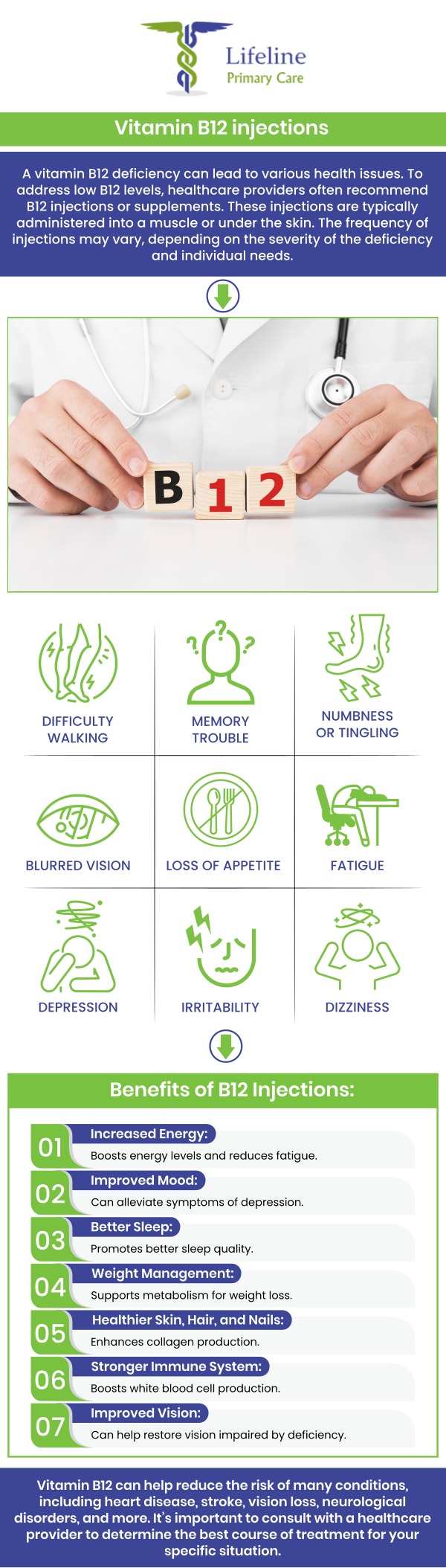
Who should be extra cautious: If your labs are normal, an injection schedule may not make sense. Also be cautious if symptoms are severe or rapidly worsening—tingling, weakness, difficulty walking, or significant shortness of breath deserve prompt medical assessment rather than “trial injections.”
Practical Benefits and Where It Falls Short
Here’s the consumer-style part: when Vitamin B12 injections go well, you’re not just taking “more vitamin”—you’re addressing a specific bottleneck. But benefits are not automatic, and they’re not instant for everyone.
Personal experience case (positive, but conditional): I once reviewed a regimen someone in her early 20s did after labs showed low B12 alongside borderline anemia. Her clinic started with a loading phase—multiple injections over the first couple of weeks—then moved to a spacing schedule. She reported that the “background fatigue” eased gradually, not overnight. By the end of the second month, she said her energy felt more stable on days she slept reasonably. Importantly, she emphasized that she also corrected iron intake and improved consistent meals, which likely helped too. Her improvement didn’t feel like a miracle; it felt like her body had fewer “missing pieces.”
Negative case (what can go wrong): Another case I saw involved a woman who started Vitamin B12 injections: dosage & frequency based on social media rather than lab confirmation. She booked injections every week for about a month and expected a quick cognitive boost. She didn’t notice meaningful change in brain fog and still felt exhausted. When she finally got labs, her B12 was not clearly deficient; her main issue turned out to be iron deficiency plus inconsistent sleep. That experience was frustrating for her because the injections became a costly detour—roughly $200–$400 over that month depending on clinic pricing—without resolving the actual driver.
Takeaway: Vitamin B12 injections can be helpful when deficiency is real. When it isn’t, injections may add cost and side effects without addressing the root cause.

What Research Suggests and What It Doesn't
The evidence base generally supports that correcting true B12 deficiency helps restore biochemical markers and, over time, can improve related symptoms—especially when deficiency is confirmed. However, research does not support blanket promises like “everyone feels better quickly” or “injections work faster than oral in every situation.”
What research typically aligns with:
- Lab correction matters: benefits are most likely when B12 deficiency is real and the regimen corrects the deficiency.
- Time course varies: symptom improvements (if they happen) may take weeks, and some nerve-related changes can take longer.
- Oral can be effective for some people: for certain deficiencies, oral B12 may work, depending on the cause and dosing.
What research does not guarantee:
- Fast symptom resolution: fatigue and cognitive symptoms have many causes.
- Universal superiority of injections: injections may be preferred when absorption is poor, but not necessarily always.
- Risk-free use: even if B12 is generally well-tolerated, any injection introduces the possibility of local reactions and may not be appropriate for everyone.
Risks to keep on your radar: injection site pain, mild rash, headache, dizziness, or nausea can occur. Rare reactions are possible with any medication. The bigger caution is not just side effects—it’s making sure you’re treating the right problem. If your symptoms come from iron deficiency, thyroid issues, or sleep deprivation, B12 injections may not be the fix you’re hoping for.
Ingredients, Formats, and Quality Signals
When you’re looking at Vitamin B12 injections: dosage & frequency, the “dose” is only one part. The form, concentration, and manufacturing quality can matter.
Common B12 injection forms:
- Cyanocobalamin: widely used; can be preferred depending on availability and clinician preference.
- Hydroxocobalamin: another B12 form used in some regions/clinics.
Typical product presentation:
- Sterile vial or prefilled syringe labeled for injection.
- Strengths commonly expressed in micrograms (mcg) or sometimes in milligrams (mg), with many clinical regimens using hundreds to thousands of mcg per dose depending on the plan.
- Clear labeling of route (IM vs SC) and instructions for administration—preferably not “mystery dosing.”
Quality signals I’d look for (consumer checklist):
- Transparent labeling: exact form (cyanocobalamin/hydroxocobalamin), concentration, and intended route.
- Sterile manufacturing standards: appropriate regulatory compliance and packaging designed for injection.
- Consistent clinician oversight: a plan tied to labs and follow-up testing.
- Reasonable administration: injection technique questions answered, not rushed.
Price reality check: In many areas, clinic visit fees plus medication cost can make injection plans expensive. Depending on dosing frequency, it can run from around $50–$150 per injection in some settings, but the total varies widely. Always ask for a written estimate and whether follow-up labs are included.
Comparison of Common Options
This is a consumer-oriented comparison, using “typical” patterns you’ll see in discussions and clinic schedules. Your exact Vitamin B12 injections: dosage & frequency plan should still come from your clinician and labs.
| Format | Typical Dose/Use | Pros | Cons | Cost | Best For |
|---|---|---|---|---|---|
| IM injection (loading style) | Frequent injections early (often weekly or several times/week) then taper | Direct administration; common for documented deficiency | Time/needle burden; needs follow-up plan | Often highest upfront | Confirmed low B12 with symptoms or absorption concerns |
| IM injection (maintenance) | Spaced injections (e.g., monthly or every few months depending on labs) | Lower appointment frequency | Still ongoing cost; may not address other deficiencies | Moderate recurring | After labs stabilize |
| SC injection (where offered) | Small, consistent subcutaneous dosing may be used by some providers | May be more comfortable for some people | Not all clinics offer SC; plan varies | Varies by provider | When your clinician specifically recommends this approach |
| Oral high-dose B12 | Daily or frequent oral dosing (often high micrograms) when appropriate | No needles; can work for many | May be less effective in severe absorption impairment | Often lowest | Mild deficiency or maintenance when absorption allows |
| Oral + injection “bridge” | Short injection course plus oral maintenance | Can reduce time spent on injections | Requires careful monitoring to avoid under- or overtreatment | Mid-range | When you need a boost but labs suggest oral may help long-term |
Buying Framework and Red Flags
If you’re shopping for Vitamin B12 injections: dosage & frequency information online or booking with a clinic, use a simple buying framework. The goal is clarity—not speed.
Checklist (use before your first injection):
- Labs first: Ask whether you should check B12 and, if relevant, CBC, iron studies, and sometimes methylmalonic acid or homocysteine.
- Form + route: What exact B12 form is used, and is it IM or SC?
- Dose and schedule in writing: How many injections, over what period, and what interval after that?
- Monitoring plan: When will you recheck labs, and what would “success” look like?
- Expected timeline: What changes should you realistically watch for in 2–6 weeks?
- Total cost estimate: Medication + visit fees + any lab follow-up.
- Administration standards: Who gives the injection, and are sterile techniques and labeling used?
Red flags I’d avoid:
- “One dose fits all”: no discussion of labs, cause, or monitoring.
- No documentation: you can’t find the product name, concentration, or planned schedule.
frequent Vitamin B12 injections: dosage & frequency plans that continue indefinitely without follow-up labs. claims of immediate cognitive transformation or cure-all results. pricing that changes after you’ve already committed.
Common Mistakes and How to Avoid Them
Women looking into Vitamin B12 injections: dosage & frequency often run into predictable traps.
- Skipping the “why”: Treating symptoms without confirming deficiency. If your fatigue is from iron deficiency, B12 won’t fully solve it.
- Expecting instant results: Even with real deficiency, improvements may take weeks. Plan patience, not panic.
- Ignoring other labs: Iron deficiency and thyroid issues can mimic B12 deficiency. Ask what else should be checked.
- Not tracking side effects: If you get headaches, rashes, or injection-site reactions, note timing and severity. Don’t just “push through.”
- Combining without a plan: Oral B12 can be continued, but the combined approach should fit your schedule and lab goals—don’t freestyle it.
- Underestimating cost: Your budget matters. A plan that is “working” on paper might not be sustainable if you end up paying for frequent visits.
FAQ
Is it proven that Vitamin B12 injections help if you’re low?
Evidence generally supports that correcting true B12 deficiency helps normalize relevant biomarkers and can improve deficiency-related symptoms over time. It’s less reliable when levels aren’t actually low or when symptoms come from another cause. Your best indicator is your lab pattern and a clinician-directed plan.
How long does it take to notice changes with Vitamin B12 injections and dosage frequency?
Some people notice subtle improvements within a few weeks, while others take longer—especially for fatigue and any nerve-related symptoms. A typical consumer expectation is “not overnight,” and symptom changes often correlate with lab correction and addressing co-factors like iron or sleep.
What are the common side effects of Vitamin B12 injections at typical dosage levels?
Common experiences include injection-site soreness, mild headache, dizziness, nausea, or rash. Most reactions are mild, but any severe or persistent symptoms should be evaluated promptly by a clinician. Your specific risk depends on your health history and the product used.
Can I combine oral B12 with Vitamin B12 injections for better results?
Often, clinicians use oral B12 for maintenance after an injection course, or they may recommend oral alongside injections depending on absorption risk and lab targets. The safe approach is to combine only if it fits your prescriber’s plan and doesn’t conflict with your monitoring schedule.
Vitamin B12 injections vs oral B12: which is better for my situation?
If you have absorption impairment, injections may be favored. If you have mild deficiency or you can absorb oral B12 well, oral supplementation can work for many people. The “better” option depends on the cause of low B12, your lab results, and practical factors like comfort, cost, and adherence.
A Practical 2-Week Experiment Framework
This isn’t about replacing medical care. It’s about creating structure so you can evaluate how you feel and whether your plan makes sense.
Day 1 (setup):
- Confirm what you’re doing: the injection form, route, and the planned Vitamin B12 injections: dosage & frequency schedule.
- Write down baseline notes: sleep hours, fatigue level (0–10), concentration level (0–10), and any tingling or other symptoms.
- List any other supplements and meds you take so your clinician can review interactions (even if B12 is generally straightforward).
Days 2–7 (stabilize variables):
- Keep sleep and meals as consistent as possible.
- Track: injection-site reactions, headaches, GI changes, or rash.
- Do not add new supplements mid-week unless your clinician instructs you to.
Days 8–14 (evaluate + communicate):
- Compare your 0–10 scores to Day 1. Look for small trends, not miracles.
- If you had side effects, note timing relative to the injection.
- Prepare questions for follow-up: “Does my schedule match my lab results?” “When should labs be rechecked?” “Should we also evaluate iron or thyroid?”
Decision rule (consumer-friendly): If you feel worse, develop a rash, or notice significant neurological symptoms, stop DIY changes and contact a clinician. If you feel unchanged after two weeks, that doesn’t prove the plan is wrong—but it may justify asking whether the deficiency was confirmed and whether other causes (iron, sleep, stress, thyroid) should be investigated.
About the Author
Author: Jordan Lee, M.S., Clinical Nutrition Review Desk
Jordan Lee is a nutrition writer who focuses on evidence-based consumer health education. Over the past six years, she has reviewed hundreds of user-reported experiences related to supplementation and deficiency testing, translating common clinic schedules into readable, cautious guidance. Her work emphasizes measurable outcomes (like lab patterns and symptom timelines) and highlights failure cases where people didn’t have true deficiencies or had coexisting issues such as iron deficiency.
Disclaimer: This article is for information only and is not medical advice. Injection decisions, including Vitamin B12 injections: dosage & frequency, should be made with a qualified clinician based on your medical history, lab results, and risk factors.
Discussion